
Inspired or curious about something The Fundamentalists chatted about on the podcast? Browse these carefully curated show notes to reference and recap where you heard a particular mention, concept, or other thought. Did I miss something? Please let me know and and share your thoughts or suggestions!
Please note: These show notes were a personal passion project. As an avid listener of the show, I created these for a select number of episodes.
December 15, 2019
MENTIONS:
0.42 - The Expanse
1.12 - Robert Kirkman’s, Sky Bound
4.07 - Valleyfolk tour begins 1/18 - Sketch Fest, Chris & Paul Show: Bring the Funny (Denver, Salt Lake City, Tacoma, Seattle)
4.45 - Elliott - Stand-up show in Washington DC, April 2020
6.41 - Freudian Slip - A Freudian slip, also called parapraxis, is an error in speech, memory, or physical action that occurs due to the interference of an unconscious subdued wish or internal train of thought. The concept is part of classical psychoanalysis. (source)
6.49 - Kierkagaard - Søren Aabye Kierkegaard was a Danish philosopher, theologian, poet, social critic and religious author who is widely considered to be the first existentialist philosopher (source)
6.55 - Jung - Carl Gustav Jung was a Swiss psychiatrist and psychoanalyst who founded analytical psychology. Jung's work was influential in the fields of psychiatry, anthropology, archaeology, literature, philosophy, and religious studies. (source)
13.88 - Sex and the Failed Absolute - about the nature of reality
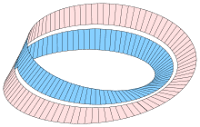
18.10 - Mobius strip - unoriented shape
31.26 - Judge Dredd
33.10 - Disney - The Imagineering Story
48.03 - Felix Culpa - “Happy Fall”
49.50 - Joe Rogan
55.33 - Emancipation After Hegel: Achieving a Contradictory Revolution Book by Todd McGowan
57.31 - Rob Bell’s Holy Shift Tour
QUIPS and QUOTES:
8.02 - We aren’t often into something ourselves, we’re just into the other person liking it. It’s how pleasure is generated
8.30 - Happiness is displaced into “the other”
9.09 - Story of “Seamus”
11.57 - Story of 2 people stranded on an island (Slavoj Zizek)
14.07 - Sexuality - anything that is not utilitarian. Any repetitive thing that doesn’t have value. (i.e. Shake hand - not sexual vs. hold hand for longer - it becomes something more sexual)
15.15-17.21 - “Implications of Quantum Gravity,” - Elliott reads passage from, Sex and the Failed Absolute
17.38 - Basically talking about how time is invented, how reality exists
17.58 - Everything happens within time and space but to what extent is time and space a product of what happens within it?
18.44 - The curvature of reality to the curvature of sexuality (mobius strip reference)
19.50 - Interesting thing about the incarnation, is Christianity is a religion in which God prays (like that mobius curvature)
20.45 - Kierkegaard was very interested in this observation of Christianity
22.21 - Messiah, you can be a messiah without being an incarnation (Christ)
22.55 - We are the “shit”/excrement of God, the lowest
24.30 - Caesar Augustus story is also told to be born of a virgin but as an emperor who ruled from a mansion vs. the narrative of Jesus born in a manger. The appealing part of the story about a very different understanding of the absolute
26.11 - Earliest gospels are about 60 years after the event
26.37 - Kierkegaard describes the nativity narrative as the “absurdity of Christianity,” it’s turned on its head on notions of power/authority. Completely upside down, like a mobius strip.
27.00 - Peter talks about how he grew up celebrating Christmas in Northern Ireland
28.00 - Santa narrative and Coca Cola Santa - contradiction, symbol of commercialism and also the symbol of giving/self-sacrifice
29.14 - Magic appearance of gifts from Santa - ultimate ideology of capitalism - we see commodities divorced from who made them, where did they come from
29.32 - Marxist theory - any commodity is connected with the world
31.16 - Hegel - abstraction, we abstract the object from its concrete relation
32.39 - Marx - theological dimension of the commodity - the commodity is full of metaphysical niceties and theological subtleties
34.10 - How to reconcile the fact that Disney is evil - massive corporation/monopoly - it exists within the whole dome that we’ve created. We are part of the system that created Disney
35.34 - Potentially start to find freedom is to become disillusioned - disillusionment: to begin to see the material circumstances that are around; become less materialistic
36.30 - Scooby Doo - standard enlightenment critique of religion, i.e. character dressed as a ghost/monster, terrorizing others, Scooby Doo gang rips off mask at the end, you realize, beneath the mystical, weird, supernatural stuff there’s actually a natural explanation
37.44 - There’s a 2nd mask that they never take off. It’s the weird mystical thing that keeps the “baddy” so obsessed with money that they’ll do anything to have it. Thinking that somehow having that treasure will fix everything
38.23 - The mask of the commodity just appearing to us (like Santa giving to us) which is just attaching us to a magical object
39.33 - Secular Santa Story - ideology vs. version of God as a baby - Yin Yang of the holiday
40.00 - Contradictions caught up in Christmas - the “baby” thing - God as the absolute, becoming an alienated individual. A story of how Reality itself is alienated (Hegel)
40.30 - Our feeling of alienation: in quantum mechanics, what we discover is the non-at-oneness of reality itself. We have particle duality (Zizek’s book)
40.40 - Particle duality example: It’s not that we’re unfulfilled, we aren’t whole, but the universe is whole. The universe is substantial, but we aren’t. No. The universe isn’t substantial either, it is weirdly in a type of deadlock with itself
41.00 - Hegel - This is beautifully described in the Christmas story: The Absolute (who lacks the lack) God, actually identifies fully with lack. And in that, you’re broken free from the pursuit of wholeness, you’re able to embrace the struggle of existence
41.33 - (Elliott) “Meditation and psychoanalysis” YouTube search
42.25 - Focus on breath, activate part of the brain that’s less used
43.23 - At its extreme, it’s both impossible, in psychoanalysis, but the closer you get to it the more you actually dissipate - the enjoyment of the experience (drugs, sex, alcohol…) help feel a little less stress but actually when you really get in-sync with the universe, you get in-sync with the chaos. You can’t get rid of the chaos because you are the chaos
44.10 - “You are not in traffic, you are traffic.”
46.00 - Incarnation can sound like a very mystical idea but it simply means the coincidence of the opposites - the highest and lowest meeting
47.07 - Hegel - “The spirit as a bone.” - Bone is the “symptom” (i.e. bad back) but the symptom is a manifestation of the truth of some conflict within you - that’s a type of incarnation
50.08 - Smoking weed and getting hyper-paranoid has a tendency to illuminate the fragility of life. All things are temporary
51.08 - Lacan - Definition of anxiety - not knowing who you are to “the other” - weed can exacerbate that thinking
53.53 - Marx does not fit very neatly into the critiques that are being called “Marx” - His primary thing is he provided a very in depth look at the contradictions of capitalism. He wasn’t doing a lot of moralizing. He had a deep respect for capitalism. He thought it was an evolution from the previous mode of production which was feudalism, which was an evolution from slavery. How a certain form of economic activity generates certain contradictions that themselves lead to a different mode of production
54.52 - “Yeah, capitalism works, it’s great. Don’t get too attached. Hold it lightly because it will change and grow.”
55.25 - Any debate where emotions are high it means you can’t really talk about the issues.
55.33 - The best critique of Marx is Todd McGowan’s book, Emancipation After Hegel (see Mentions). Marx is unearthing contradictions but there is still this element in Marx where he thinks society can exist without contradiction. This is an element that means that Hegel is probably better than Marx (according to Peter)
56.46 - Peter’s takeaway: 1) You can read the Nativity as a political critique of the time, the idea of God having an army and power and being for the powerless. 2) Santa is just a reflection of our everyday experience of commodities. 3) The incarnation as the identity of the highest with the lowest, the holy with the shit
57.31 - To get to joy, you have to go as deeply into cynicism as you can. The problem with cynicism is it’s not cynical enough - you have to go into the absolute experience of meaningless and death, and on the other side of that you will find joy, coincide of opposites (Rob Bell)
58.11 - To save your life, you’ve got to lose it.